Why the light turns on
Your car's onboard diagnostics monitor dozens of engine and emissions systems. When a system reads outside its expected range, the computer stores a diagnostic trouble code and turns on the check engine light. Common triggers include oxygen sensor readings, ignition misfires, evaporative emissions leaks, and catalytic converter efficiency codes.
A steady light usually means something needs attention soon, while a flashing light often signals an active misfire that can damage the catalytic converter and should be checked promptly.
Don't guess — get the codes read
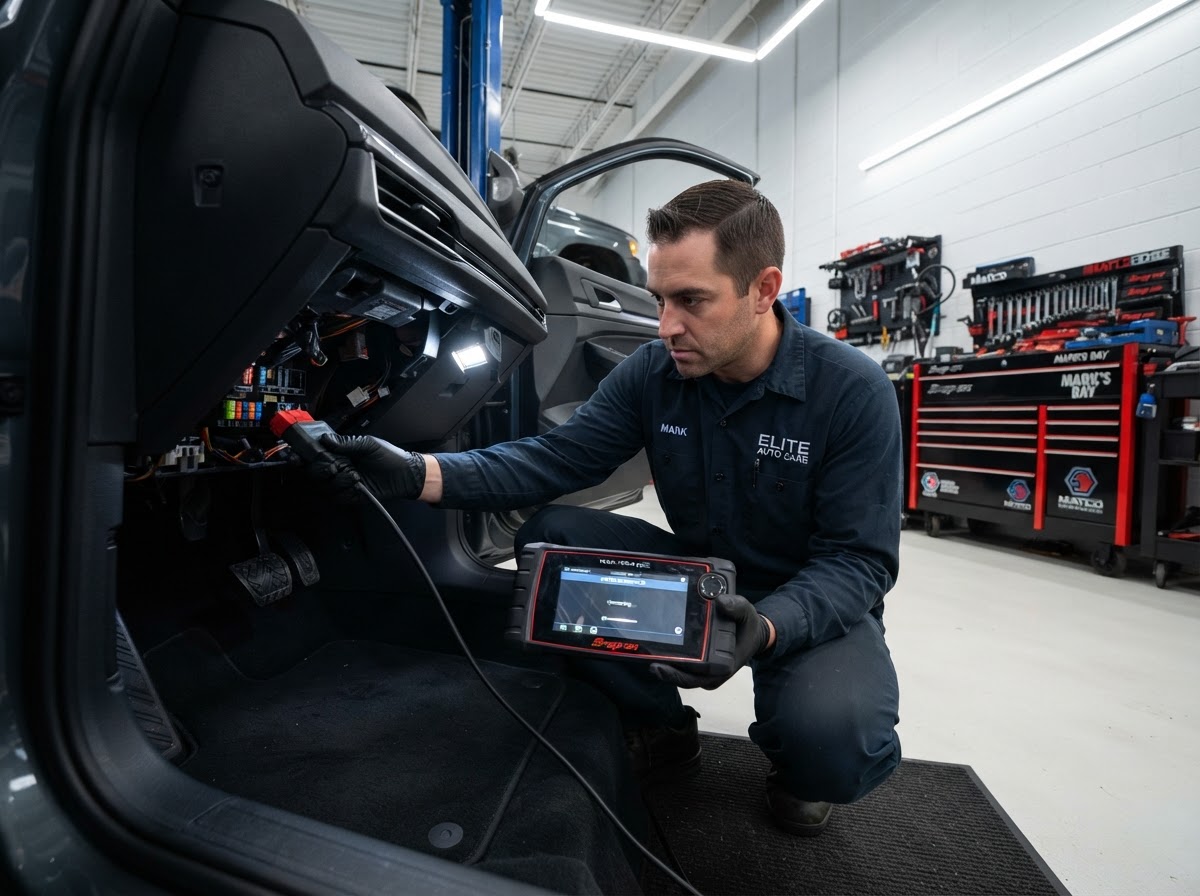
The light alone doesn't tell you which part failed. A diagnostic scan reads the stored trouble codes, which point a technician toward the system or sensor involved. From there, the component still needs to be tested before any part is replaced.
Replacing parts based only on a code is how simple jobs become expensive ones. A code narrows the search; it doesn't name the fix.
What to do next
If your check engine light is on, note whether it's steady or flashing and whether the car feels or sounds different. Then bring it in for a diagnostic so we can read the codes and inspect the relevant system before recommending any repair.
Want us to take a look?
These articles are general guidance — not a diagnosis of your car. Bring it to Happy Cars at 12935 W Colonial Dr, Winter Garden, FL 34787 and we'll inspect before we recommend any repair.